锵锵三人行
Tibetan medical thangkas draw global spotlight at symposium in Xizang_我的网站

A | 罗文在全省消防安全视频调度会议上强调以时时放心不下的责任感抓好安全生产工作全力维护人民群众生命财产安全和社会大局稳定王正谱作工作部署 王陆进等出席新闻网讯(日报记者吴韬、尹翠莉)8月20日晚,省委书记罗文主持召开全省消防安全视频调度会议。他强调,要深入学习贯彻习近平总书记重要指示精神,牢固树立和践行正确政绩观,以时时放心不下的责任感抓好安全生产工作,加强消防安全管理,全力维护人民群众生命财产安全和社会大局稳定。省委副书记、省长王正谱作工作部署,省委副书记王陆进出席。罗文指出,以习近平同志为核心的党中央高度重视安全生产工作,习近平总书记多次作出重要指示,为我们做好工作提供了根本遵循。
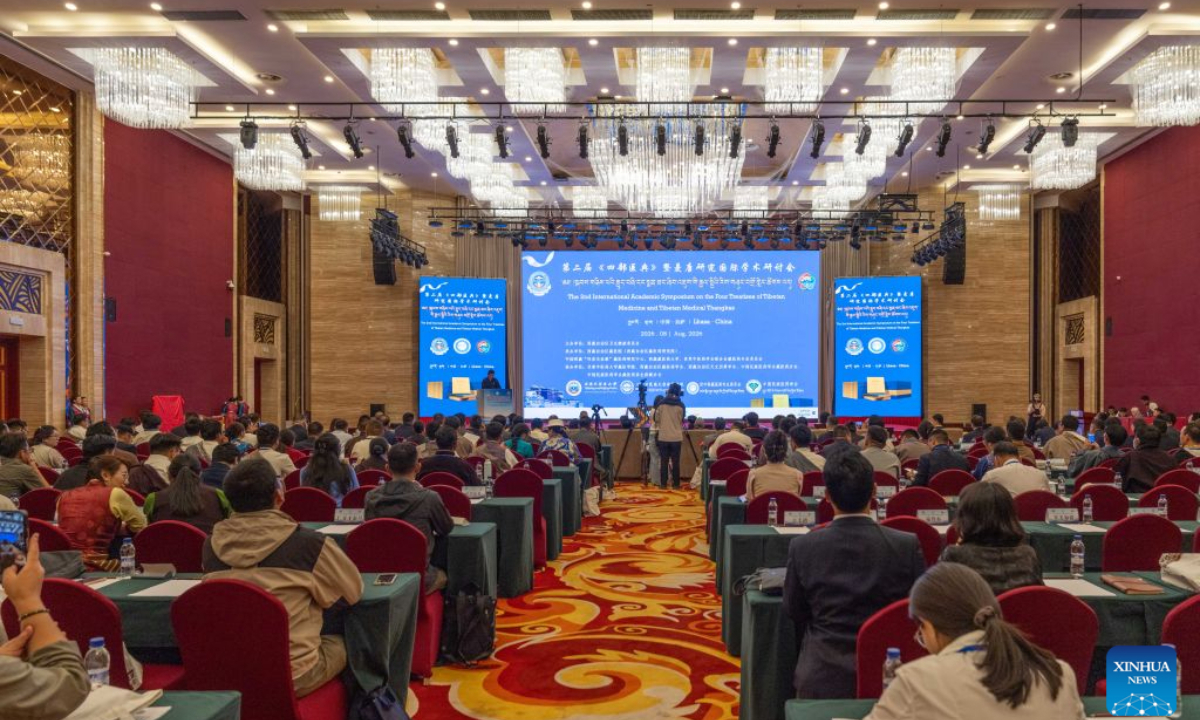
The second international academic symposium on "The Four Treatises of Tibetan Medicine" and Tibetan medical thangkas is held in Lhasa, southwest China's Xizang Autonomous Region, Aug. 20, 2026. An international symposium opened in southwest China's Xizang Autonomous Region on Thursday to shed light on the growing global interest in traditional Tibetan medicine and its visual illustrations drawn on thangkas. Held in the regional capital Lhasa, the second international academic symposium on "The Four Treatises of Tibetan Medicine" and Tibetan medical thangkas brought together more than 200 experts from China, Britain, Germany, Austria, Mongolia and Nepal. Discussions centered on the historical evolution of the classic treatises, the iconographic interpretation of Tibetan medical thangkas, and pathways for modern clinical application and international cooperation. Written between the 8th and 12th centuries, "The Four Treatises of Tibetan Medicine" is the most influential foundational work on traditional Tibetan medicine. It was inscribed on the UNESCO Memory of the World Register in 2023. Based on the work, the 80-scroll Tibetan medical thangkas serve as a visual teaching complement, covering diagnostics, pharmacology, preventive care and medical ethics. The medical thangkas were added to China's national documentary heritage list also in 2023. (Xinhua/Tenzing Nima Qadhup)An international symposium opened in southwest China's Xizang Autonomous Region on Thursday to shed light on the growing global interest in traditional Tibetan medicine and its visual illustrations drawn on thangkas.
Held in the regional capital Lhasa, the second international academic symposium on "The Four Treatises of Tibetan Medicine" and Tibetan medical thangkas brought together more than 200 experts from China, Britain, Germany, Austria, Mongolia and Nepal.
Discussions centered on the historical evolution of the classic treatises, the iconographic interpretation of Tibetan medical thangkas, and pathways for modern clinical application and international cooperation.
At the symposium, a research center for Tibetan medical thangkas was inaugurated.
Written between the 8th and 12th centuries, "The Four Treatises of Tibetan Medicine" is the most influential foundational work on traditional Tibetan medicine. It was inscribed on the UNESCO Memory of the World Register in 2023.
Based on the work, the 80-scroll Tibetan medical thangkas serve as a visual teaching complement, covering diagnostics, pharmacology, preventive care and medical ethics. The medical thangkas were added to China's national documentary heritage list also in 2023.
Among the participants was Katharina Anna Sabernig, a lecturer from the Medical University of Vienna, Austria, who first encountered Tibetan medical murals at Labrang Monastery in Gansu Province in 1994. She later returned and began delving deeper into the works.
"I saw these murals and I started to get deeper and deeper and to understand all this," Sabernig recalled.
Mary Caroline Wyatt, a scholar with dual British-Greek citizenship, began collaborating on an English translation of texts about Tibetan medical thangkas last September. She noted that complete English versions have long been scarce.
"Our translations target professional readers so that we preserve many specialized, traditional terms," said Wyatt.
The event was hosted by the regional health commission and co-organized by the regional Tibetan medicine hospital and Xizang University of Tibetan Medicine.
Xizang has formulated and implemented a series of policies on promoting Tibetan medicine and encouraging innovation. According to a government white paper released last year, the region has 51 public Tibetan medicine institutions, employing 5,287 professionals and operating 3,260 beds, up from 28 institutions, 2,232 professionals and 1,364 beds in 2012.
In April, China rolled out its first national recommended standard for ethnic-medicine disease classification and codes for Tibetan medicine.
Tsering, president of the regional Tibetan medicine hospital, said inscriptions on the UNESCO Memory of the World Register and China's national documentary heritage list have brought Tibetan medicine to a broader global audience.
"We will make the most of these opportunities to promote academic exchanges and clinical collaboration worldwide," Tsering said.
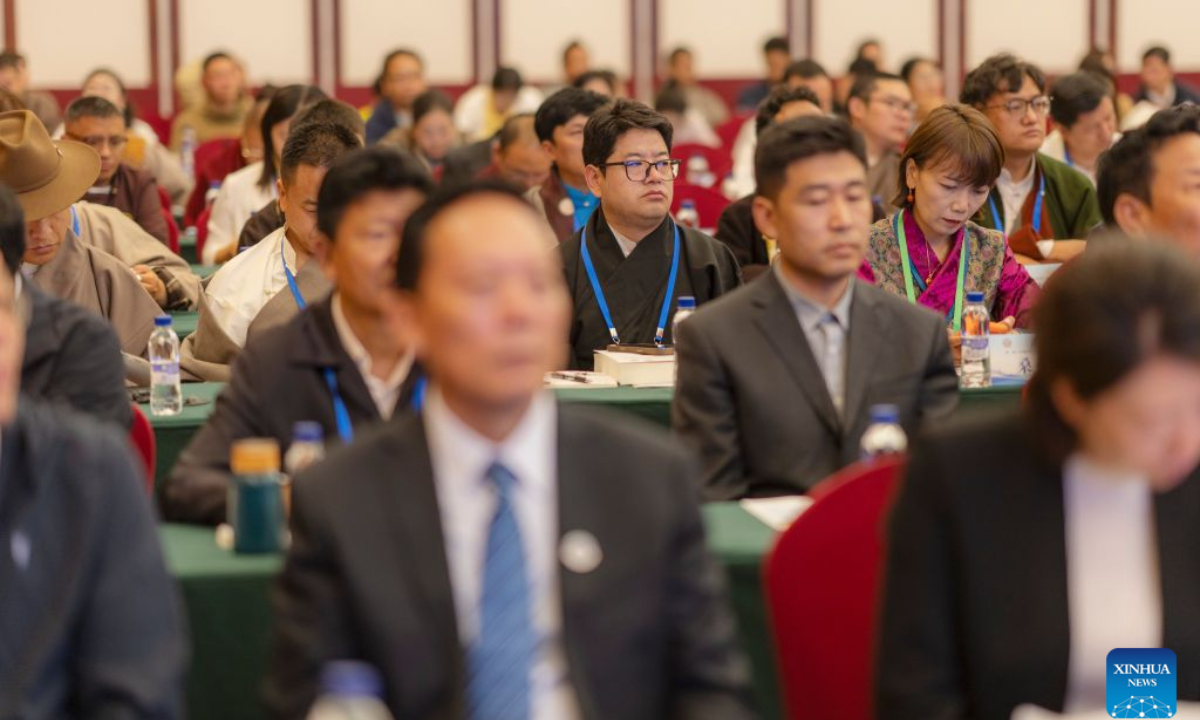
This photo taken on Aug. 20, 2026 shows a scene of the second international academic symposium on "The Four Treatises of Tibetan Medicine" and Tibetan medical thangkas in Lhasa, southwest China's Xizang Autonomous Region. (Xinhua/Liu Zhoupeng)
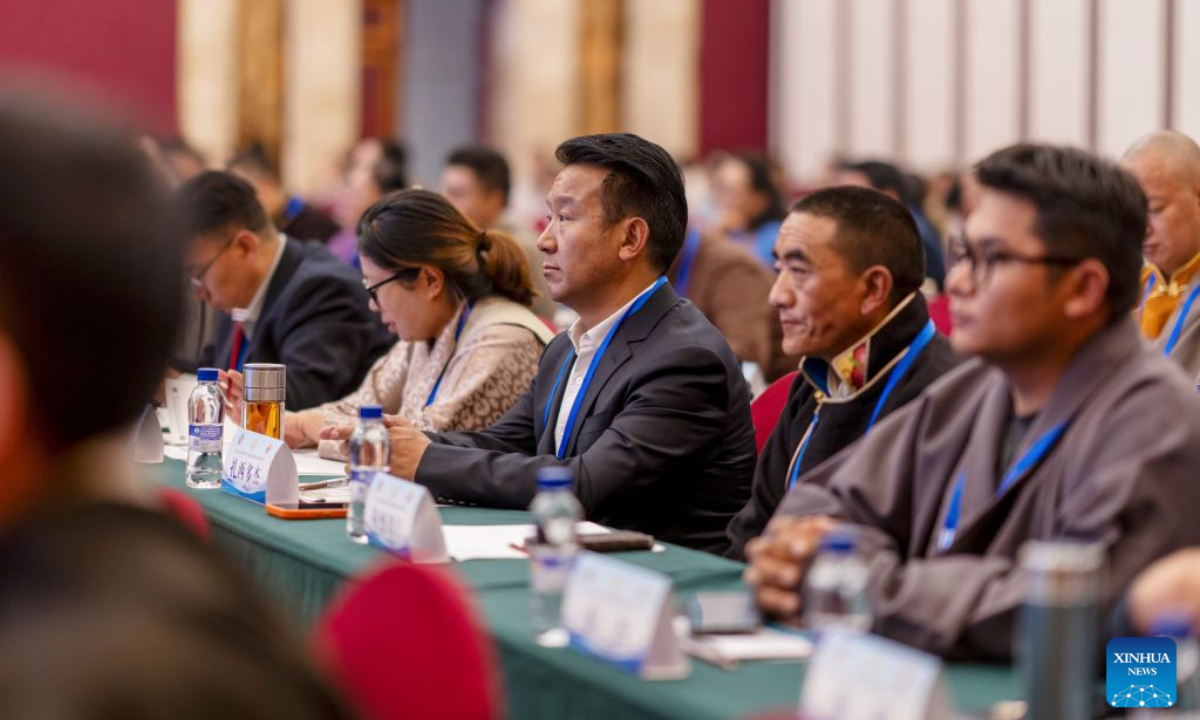
This photo taken on Aug. 20, 2026 shows a scene of the second international academic symposium on "The Four Treatises of Tibetan Medicine" and Tibetan medical thangkas in Lhasa, southwest China's Xizang Autonomous Region. (Xinhua/Tenzing Nima Qadhup)
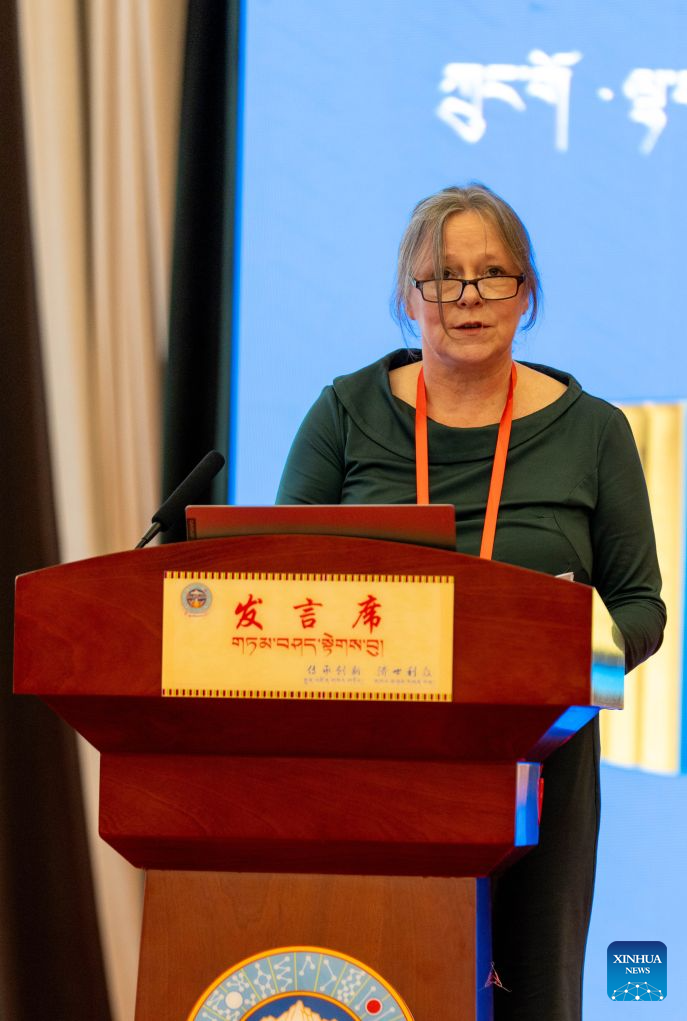
Katharina Anna Sabernig from the Medical University of Vienna, Austria, delivers a speech at the second international academic symposium on "The Four Treatises of Tibetan Medicine" and Tibetan medical thangkas in Lhasa, southwest China's Xizang Autonomous Region, Aug. 20, 2026. (Xinhua/Tenzing Nima Qadhup)
。全省各级各部门要坚决贯彻习近平总书记重要指示精神,树牢人民至上、生命至上理念,强化底线思维、极限思维,时刻绷紧安全生产这根弦,以更加有力的措施、更加有效的机制,补短板、堵漏洞、防风险,坚决防范遏制各类事故发生。罗文强调,要深入开展常态化风险隐患排查整治,以强化源头管控守稳守牢安全生产底线。要聚焦消防安全等重点领域,深入排查安全隐患,抓实抓细安全生产措施落实。要健全“三书一函”监督保障制度,对发现的各类风险隐患,建立清单台账,督促立即整改,较真碰硬、一抓到底,做到问题不解决不放过、解决不彻底不放过。要严格监管执法,重拳出击“打非治违”,坚决有力惩处安全生产违法违规行为。罗文强调,要切实加强安全生产清单制管理,压实各级党委政府安全生产属地责任、行业管理部门安全生产监管责任和企业安全生产主体责任,把责任措施落实到基层和最小工作单元。

B | 要坚持党政同责、一岗双责,在重点行业领域推行省市县乡安全生产工作包保机制,建立党政领导干部对口联系辖区重点企业安全生产工作机制,推动各项工作往深里走、往实里抓。

C | 要强化督导检查,深化明察暗访,及时跟踪问效,以责任落实推动各项举措末端发力、终端见效。

D | 王正谱强调,要严格落实安全生产各项防控措施,坚决防范遏制重特大事故发生。要加强消防安全管理,抓好多业态混合经营场所、“九小场所”、沿街店铺、城中村、老旧小区等人员密集场所隐患排查整治,强化劳动密集型企业火灾防范,畅通商场、医院、学校、养老机构、高层住宅等消防“生命通道”。要夯实基层基础,推进队伍建设,强化装备保障,提升消防应急能力。

E | 要突出常态长效,聚焦燃气、矿山、危化、建筑施工、旅游等领域,深入排查整治风险隐患,筑牢安全生产防线。会议以政务云视频会议形式召开,各市、雄安新区、各县(市、区)设分会场。

F | 省领导张超超、赵辰昕、常斌、金晖、王立彤参加会议。
Current article:http://7fjf.linlangdouwaqiexusan.bond/b87rh2/20260826/4097.html
Published on:14:45:45


 重大进展!深中通道桥梁工程完成荷载试验
 “男鞋第一股”自救:奥康国际一边收缩,一边跨界
 金山云否认与京东云合并:仅业务往来,未达成协议。
 凌晨3点 44岁阿隆索英超执教首秀:前皇马主帅PK 创奇特纪录
 Russia's FM to visit North Korea amid claims of weapons supplied to Moscow
 三星电子、SK海力士计划下半年增加对英伟达8层HBM4内存供应量